
OIS and CIPA Explained: Why Optical Image Stabilization Is Essential for Mobile Photography
In recent years, camera stabilization has taken center stage at every flagship and mid-range smartphone launch. Technical terms such as OIS and CIPA appear repeatedly. Many users wonder: What exactly are they? Does OIS truly matter? Why are all major vendors intensively advancing stabilization capabilities?
This article clearly explains—using accessible language—what OIS does, how it works, and why it delivers essential value.
1. OIS Is No Gimmick—These Scenarios Simply Don’t Work Without It
Scenario 1 | Night Photography: With vs. Without OIS Is a World of Difference
When capturing neon signage at night, a smartphone without OIS often yields severely blurred images upon shutter release: lights smear into diffuse blobs, and street signs or architectural details become indistinct. By contrast, an OIS-equipped device maintains sharp outlines of individual light sources—even when handheld—delivering clean, detailed frames with superior noise control.
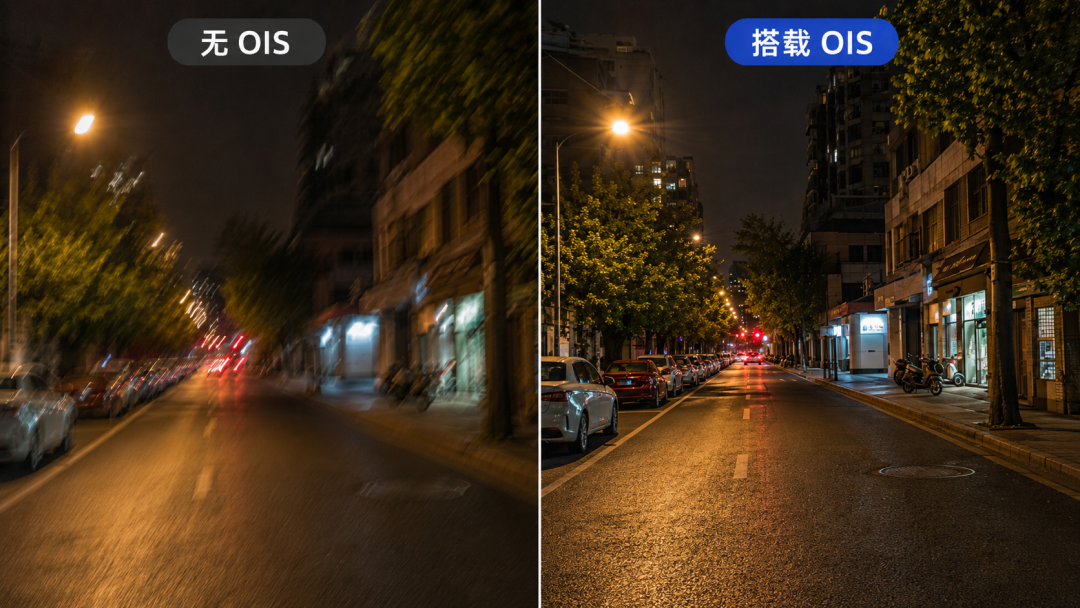
Night photography demands slower shutter speeds to capture sufficient light; without OIS, even minimal hand movement induces motion blur. OIS counteracts shake in real time, enabling stable exposure at slower shutter speeds—and delivering clean, luminous night imagery without requiring a tripod.
Scenario 2 | Outdoor Telephoto Shooting: OIS Is a Lifesaver
During weekend outings, using 5x or higher optical zoom to photograph distant birds or lotus blossoms by a lake, a smartphone without OIS suffers severe image shake and subject drift—rendering nine out of ten shots unusable. With OIS, the subject remains locked in frame, preserving fine details like feathers and petals, and significantly simplifying long-distance travel photography.

Scenario 3 | Everyday Vlogging: Say Goodbye to Dizzying Shake
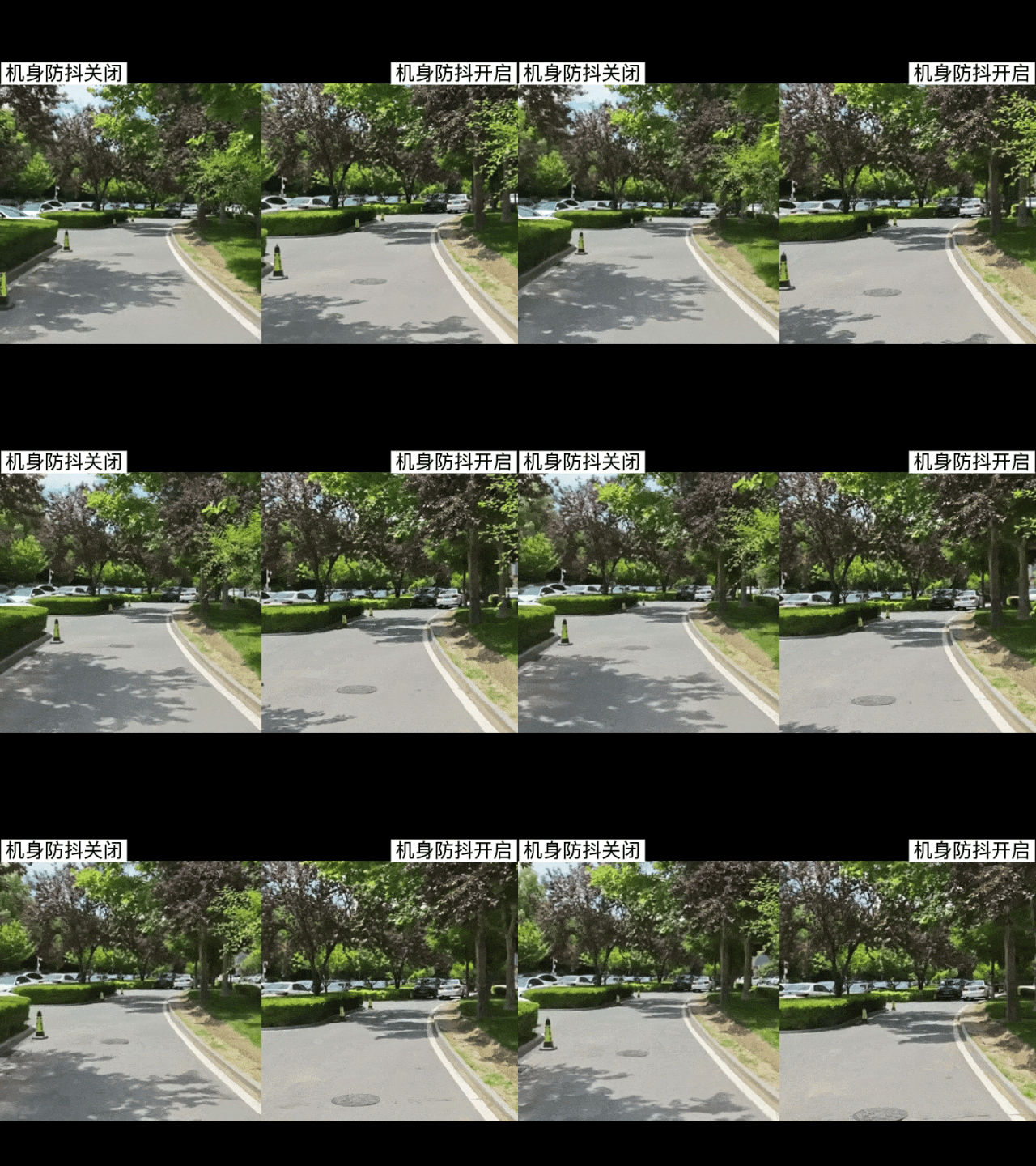
Today, many users rely on smartphones for everyday vlogging. While walking or ascending/descending stairs, footage from a non-OIS device appears noticeably jarring and uncomfortable to view. With OIS, video remains significantly steadier and smoother—approaching gimbal-level stability—enabling effortless capture of high-quality vlogs.
2. From Cameras to Smartphones: How OIS Became Standard Equipment
OIS was not originally developed for smartphones. It emerged from the digital camera industry and underwent over three decades of refinement before evolving into a core capability of mobile imaging.
The Development of OIS
In 1994, Nikon introduced the image stabilization concept and launched a compact camera featuring VR (Vibration Reduction) technology—marking the commercial debut of optical stabilization. Canon, Sony, and other manufacturers subsequently advanced the technology—from single-axis to multi-axis stabilization—until it became standard across professional camera lenses.
CIPA—the Camera & Imaging Products Association of Japan—established the globally recognized stabilization performance standard. Higher CIPA ratings indicate greater stabilization strength, enabling handheld capture at progressively slower shutter speeds. Modern smartphones now achieve up to CIPA Level 7.0.
Why OIS Moved Into Smartphones
As smartphones became the dominant imaging tool, their compact form factors and relatively small sensors made motion-induced blur far more pronounced than in traditional cameras—especially under low-light conditions or at longer focal lengths. Rising user expectations for image quality elevated OIS—a hardware-based solution—to a critical enabler of superior photography. Concurrent miniaturization of driver chips and voice coil motors enabled OIS to scale from flagship models down to mid-range devices, establishing it as a foundational feature of modern mobile imaging.
3. A Technical Look: How OIS Actually Works—The VCM Motor Is the Key
The operational logic of OIS is straightforward: sense motion, compute compensation, and physically counteract it. This entire process hinges on one critical component—the VCM motor.
The Core Working Principle of OIS
At its core, OIS (Optical Image Stabilization) eliminates handshake-induced blur in real time by physically shifting optical components—stabilizing the light path at its origin. This prevents blur before it occurs, with no image cropping and zero resolution loss. The full process comprises three stages:
1. Motion sensing: The smartphone’s MEMS gyroscope and accelerometer detect minute displacements along the X, Y, and Z axes—identifying even a 0.01-degree oscillation instantaneously.
2. Ultra-fast computation: The driver chip processes motion data and—leveraging integrated gyro and control algorithms—calculates precise reverse-compensation displacement within milliseconds.
3. Physical compensation: The VCM motor shifts either the lens assembly or the image sensor by ±100 micrometers in the opposite direction—directly neutralizing the impact of motion on the final image.
The VCM Motor: The Power Core of OIS
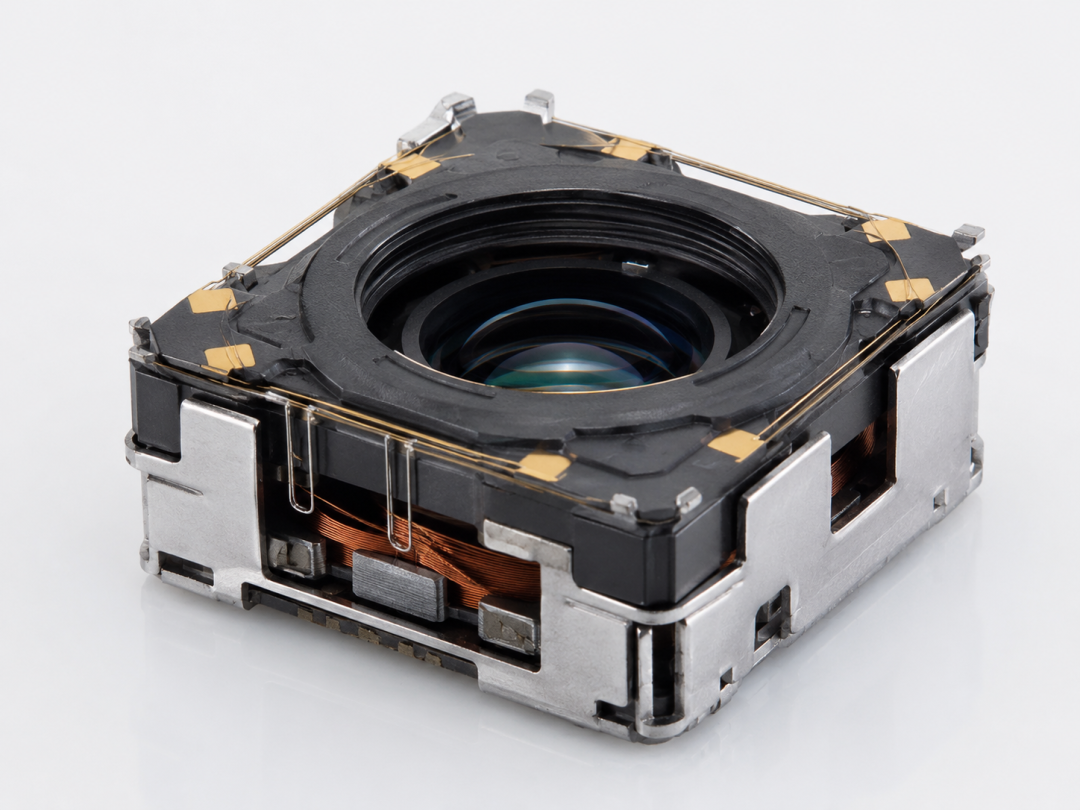
The VCM (Voice Coil Motor) serves as the heart of the OIS system—the “hands and feet” that drive lens or sensor movement for stabilization. Operating on Fleming’s left-hand rule, it modulates coil current to generate controlled electromagnetic force, enabling micron-level lens positioning. VCM motors are compact, highly responsive, and exceptionally precise; their performance directly defines stabilization efficacy—particularly in demanding scenarios like telephoto and low-light photography, where motor quality differences manifest immediately in image output.
OIS vs. EIS: Stop Confusing Them—One Relies on Hardware, the Other on Algorithms
Smartphone marketing commonly references two types of stabilization: OIS (Optical Image Stabilization) and EIS (Electronic Image Stabilization)—which differ fundamentally in both principle and outcome:
| Aspect | OIS — Optical Stabilization | EIS — Electronic Stabilization |
|---|---|---|
| Core Principle | Physical hardware movement (lens or sensor), compensating motion in real time and stabilizing the optical path at its source. | Software algorithms crop frame edges and apply post-capture correction to simulate visual stability. |
| Effect on Image Quality | Near-lossless: preserves full native resolution and full-frame detail, with no cropping. | Crops 10–20% of the frame periphery; reduces effective resolution, narrows field of view, and may introduce motion artifacts such as ghosting. |
| Key Components | Relies on dedicated hardware—including VCM motors, gyroscopes, and motion sensors. | Requires no additional hardware; implemented entirely via software algorithms. |
| Suitable Scenarios | Low-light photography, telephoto capture, video recording, and action shots—effectively counters both high- and low-frequency motion. | Casual daylight stills and brief, well-illuminated videos—effective only against mild motion. |
| Cost | Higher (requires precision mechanical components and tight integration tolerances). | Lower (software-only implementation, no added hardware cost). |
In summary: OIS represents authentic hardware capability—addressing motion at its physical origin—while EIS serves as a software-based mitigation that cannot substitute for true optical stabilization. Today, most flagship smartphones deploy hybrid “OIS + EIS” systems to balance optimal stability with uncompromised image quality.
4. The Unsung Hero of OIS—The Motor Driver Chip
Precise VCM motor operation would be impossible without its “conductor”—the motor driver chip. Serving as the “brain” of the OIS system, it receives gyroscope input, computes compensation commands, delivers precisely regulated current, and controls motor actuation—ensuring stabilization that is fast, stable, and accurate.
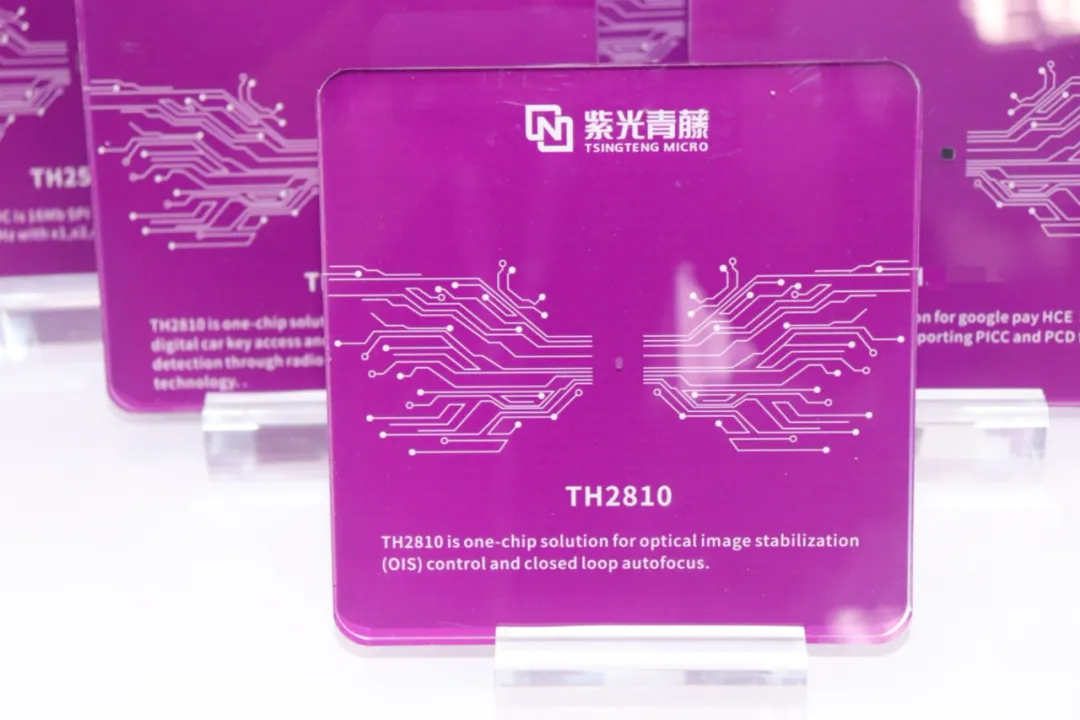
Tsingteng Micro has long specialized in motor driver chips, developing dedicated solutions optimized for high-precision, low-latency OIS applications.