AI Era Unleashed: Tsingteng Micro’s OIS Driver Chip Powers Physical AI Deployment
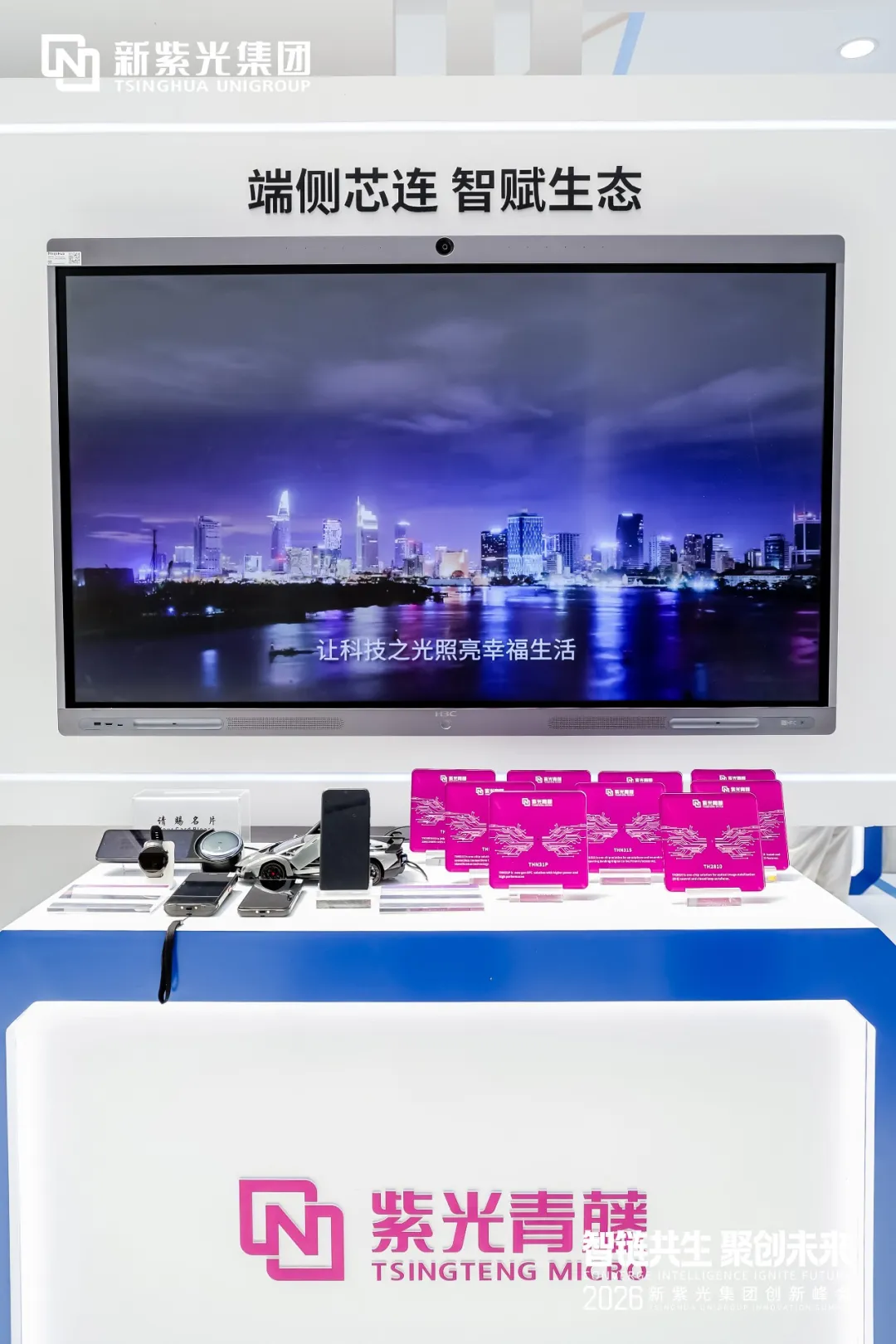
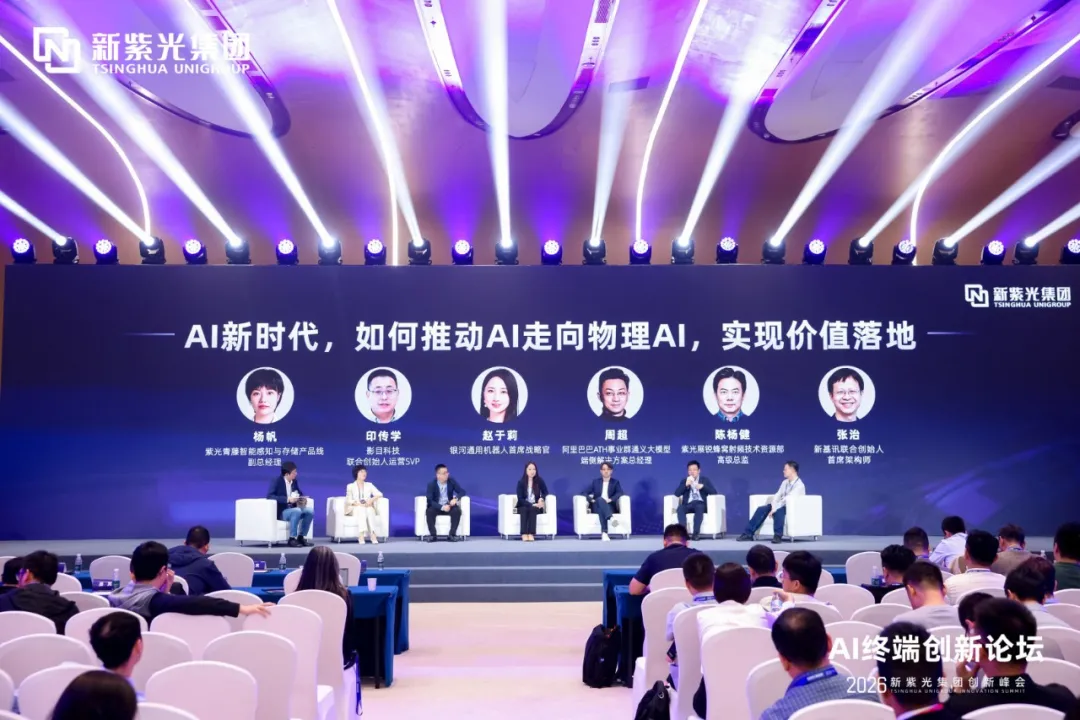
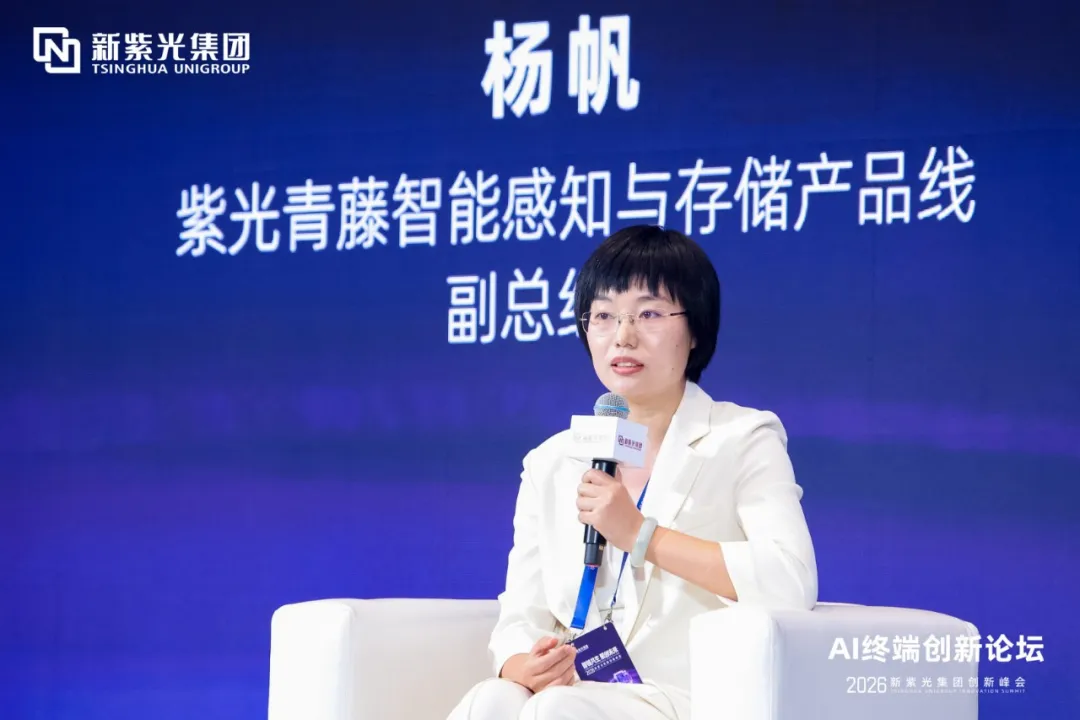
On 7 May 2026, the 2026 New Unigroup Innovation Summit was held in Beijing. Tsingteng Micro showcased its latest innovations in intelligent sensing and storage. At the summit’s AI Terminal Innovation Forum, Yang Fan, Deputy General Manager of the Intelligent Sensing and Storage Product Line, participated in the roundtable discussion “AI Era Unleashed: How to Advance AI Technology Toward Physical AI and Deliver Real Value”, sharing expert insights and practical solutions centered on optical image stabilization (OIS) to address key imaging challenges across robots, AI glasses, and other smart devices.
1. Industry Status: Dynamic Use Cases Reveal Clear Imaging Challenges
The discussion opened with a focus on a core challenge: in real-world dynamic usage, the overall imaging performance of robots, AI glasses, and other smart terminals continues to face critical bottlenecks—bottlenecks that urgently require breakthroughs and that currently hinder user experience enhancements and broader technology adoption.
AI glasses exemplify this challenge: first-person image capture is one of their core use cases. Under everyday mobile conditions—such as walking or head movement—stabilization performance, low-light imaging quality, and battery life collectively define real-world viability and directly influence market acceptance and practical value. Continuous motion-induced shake leads to visible image jitter and distortion, impairing user visual experience and reducing the accuracy of AI-based vision recognition—thereby constraining the effectiveness and scalability of AI deployment.
Most industry solutions today rely on electronic image stabilization (EIS). However, fundamental limitations of EIS constrain its ability to balance frame completeness with stabilization smoothness—making it insufficient for premium applications. Moreover, in low-light and nighttime environments, motion-induced shake further restricts shutter speed flexibility, resulting in increased noise and diminished detail fidelity—posing significant challenges to stable AI vision recognition under weak-light conditions.
2. The Path Forward: Tsingteng Micro’s OIS Driver Chip as a Technical Breakthrough
In response to these dynamic imaging challenges across smart terminals, optical image stabilization (OIS) has emerged as the core technical enabler for overcoming imaging bottlenecks—and for supporting the large-scale deployment of physical AI. Building on proprietary foundational technologies, Tsingteng Micro delivers a differentiated OIS-driven solution, offering the industry new, scalable technical support.
Tsingteng Micro’s newly launched discrete OIS driver chip, TH2810, is among the first in the industry to leverage an advanced process node—delivering comprehensive improvements in hardware performance and integration density over mainstream 90 nm and 110 nm solutions. Integrated with a low-noise Hall sensor and a high-precision sampling module—and powered by Tsingteng Micro’s proprietary PID intelligent control algorithm—the chip precisely detects subtle posture disturbances. Through high-speed real-time computation and closed-loop dynamic adjustment, it delivers exceptional compatibility with highly dynamic, mobile platforms including smartphones, robots, and AI glasses.
From a product and industrial-fit perspective, the advanced process enables a compact, ultra-thin package—perfectly aligned with the lightweight, space-constrained design trends of wearables and miniature smart devices. Its reconfigurable architecture ensures broad hardware compatibility, enabling rapid adaptation to diverse motor specifications. This significantly streamlines customer development and tuning efforts, shortens time-to-volume production, helps enterprises reduce costs and improve efficiency, and accelerates end-product commercialization.
3. The Road Ahead: Evolution Trajectory of OIS Driver Chips
As OIS adoption expands across physical-AI applications—including smartphones, robots, and AI glasses—the industry increasingly demands higher performance, smaller form factors, and greater adaptability from OIS driver chips. Their evolution trajectory will directly shape the depth of physical AI deployment and the magnitude of industrial value unlocked.
On the future evolution of OIS driver chips, Yang Fan outlined a clear strategic roadmap—synthesizing industry trends and Tsingteng Micro’s own positioning. Today, ultra-thinness, ultra-low power consumption, and ultra-low latency constitute the central axis of OIS driver chip innovation—and serve as the key levers for enabling diverse smart terminal scenarios and elevating user experience. Guided by this direction, Tsingteng Micro will advance its OIS driver chip technology and product portfolio along three core dimensions:
1. Ultimate Low-Latency, High-Precision Closed-Loop Control: Enhancing real-time dynamic responsiveness to ensure stable and reliable visual perception for robots and AI glasses—even under continuous motion.
2. Highly Integrated, Ultra-Compact, Low-Power Design: Meeting stringent manufacturing requirements for wearables and small robots—where thin profiles, lightweight construction, and extended battery life are non-negotiable.
3. Deeper Integration with Chip Platforms and the AI Model Ecosystem: Enabling scenario-specific, co-optimized solutions that seamlessly connect the full stack—from sensing and actuation to AI inference.
Looking ahead, Tsingteng Micro will build upon its proprietary drive-control technology, deepen foundational innovation in physical-AI sensing, continuously strengthen the sensing infrastructure, and fully empower AI deployment across real-world environments—helping the entire industry achieve both technological advancement and tangible industrial value.